
Results of the Corporate Prayer Survey of Scottish Churches in 2025
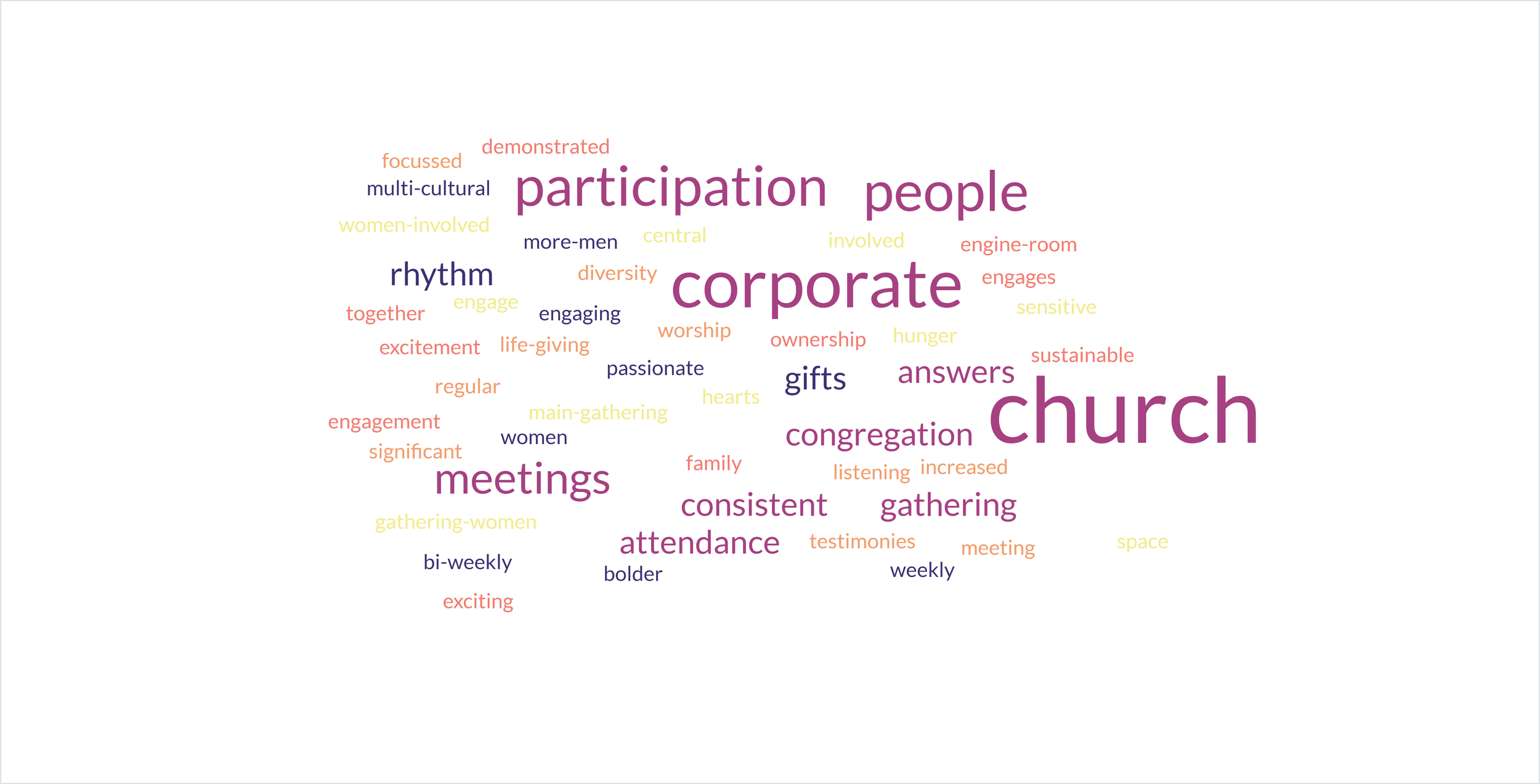
When church leaders were asked about the key fruit they had seen in their local church's times of gathered prayer this year, they responded that they had observed deeper unity, a greater sense of community, and encouragement as God’s gathered people. Gathered prayer has strengthened togetherness, mutual care, and hope, as people open their lives to one another and God’s great purposes in Scotland in this time. They also noticed a growing hunger for God and sensitivity to the Holy Spirit.
Some of the disappointments concerning prayer in local churches over the last year have been the limited participation across the wider church, with prayer not yet being prioritised by church leadership or membership alike. Prayer initiatives and gatherings are not sustained consistently and often very quickly lose momentum as church leaders find it difficult to prioritise gathered prayer amid busy church life. Church members often lack the confidence to enjoy praying in a gathered setting in church, praying out loud can be daunting in a corporate setting unless it is well led.
Do leadership and eldership teams regularly pray meaningfully together across Scotland? While some leadership teams described their times of gathered prayer as leadership teams as fruitful and encouraging, others note that it can become routine or brief, focussed on a crisis situation and in some cases business pressures limit its meaningfulness as administration crowds out prayer.
When asked about the link between gathered prayer activity in churches and the impact of those times of prayer on mission, outreach, and private 'closet' prayer, church leaders responded that gathered prayer times had led to spiritual change, unity, and growth, shaping the atmosphere and bearing fruit in ministry and outreach in their churches —even when outcomes weren’t always easily measured or took time to show and demonstrate. It was noted that dullness in prayer often led to dullness in ministry, while answered prayer and renewed zeal positively influenced outreach and personal prayer life across the board.
What did church leaders say about multi-generational and multi-cultural participation? Responses mentioned that the more traditional settings and smaller congregations had a more limited ethnic diversity, and sometimes dominant prayer styles unintentionally restricted broader generational or cultural involvement. There was a need to intentiony invite individuals to bear fruit in broadening the participation. Where diversity was present, it was often encouraged through inclusive leadership of prayer events, open invitations and specific invitations of individuals to prayer, accessible prayer formats, sensitivity to others gathered, coaching in leading times of prayer, and creating space for children and quieter voices.
There were many testimonies of significant breakthrough as a result of times of gathered prayer as a local churches including healings, ministries started, key gifts and individuals being provided by God in response to prayer. Prayer played a vital role in preserving unity during seasons of change, breaking spiritual strongholds. Where prayer was reposition at the centre of church life, it strengthened the church’s identity in Christ and its mission strength adn sustainability.
The greatest longing for 2026 around corporate prayer in local churches, was to see wider and more diverse participation in prayer, for payer to move from the margins to the centre of church life, to be marked by boldness, expectancy, listening to the Holy Spirit, and an increase of free expression of spiritual gifts. To see clear fruit, testimony, and transformation flowing from prayer and to enter into a sustainable prayer culture that fuels mission and is led well by healthy leadership teams who themselves enjoy the fruit of prayer in their times together as leaders of local churches.
For an illustrated summary - see this link.
For a more detailed look at the survey results - see this link.